
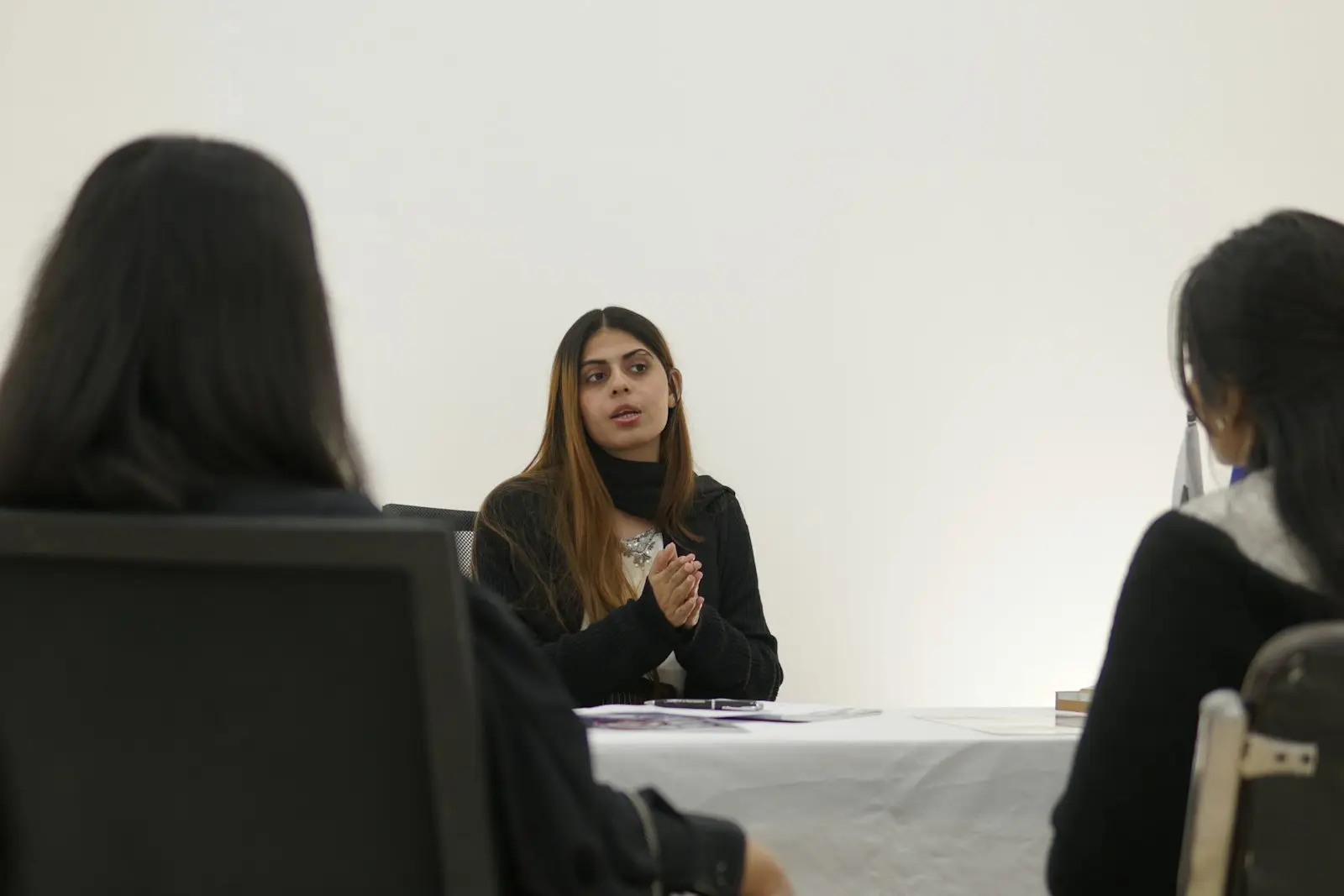
You start to make your point and someone talks over you. You try again and the conversation has moved on. Ten minutes later, a colleague says almost the same thing and everyone nods.
If that sounds familiar, you are not alone, and it is rarely about the quality of your ideas. Learning how to be heard in meetings is about preparation, timing, a few well-chosen phrases and quiet allies. Here is a practical approach.
Why some voices get lost
Meetings reward speed, volume and status. People who pause to think, speak more softly or are newer to the group are easy to talk over, even by colleagues who don’t mean to. Hybrid meetings make it worse: online voices are often overlooked by those in the room.
The good news is that most of these dynamics can be changed with small, consistent habits.
Before the meeting: set yourself up
- Know your one point. Decide the single thing you most need people to hear, and say it in one sentence.
- Get on the agenda. Ask the chair for a slot. A named item is much harder to talk over.
- Pre-wire key people. Share your idea with one or two attendees beforehand so they are ready to support it.
- Read the room in advance. Know what the decision-maker cares about and frame your point around it.
In the meeting: timing matters
Speak in the first ten minutes. Early contributions shape the discussion and make it easier to speak again later. Waiting for the perfect moment often means it never comes.
Lead with your conclusion, then give your reasons. “I think we should delay the launch by two weeks, for three reasons” is far harder to interrupt than a long build-up.

Phrases for when you’re talked over
| Situation | What to say |
|---|---|
| Someone interrupts you | “I’d like to finish my point, then I’m keen to hear yours.” |
| Your idea is repeated by someone else | “Thanks for picking up my earlier suggestion. Here’s how I’d take it forward.” |
| The conversation moves on too fast | “Before we move on, I want to come back to one point.” |
| You’re online and can’t get in | Use the raise-hand feature, then: “I have a quick point on this.” |
| A colleague is talked over | “I’d like to hear the rest of what Sam was saying.” |
Say these calmly, at a normal volume, and keep eye contact. The aim is to hold your ground, not to win a contest.
Use your voice and body
- Sit forward and take up a little more space at the table.
- Slow down slightly and drop your pitch at the end of sentences, so statements don’t sound like questions.
- Avoid softeners like “I might be wrong, but…” or “This is probably a silly idea…”.
- Pause after your key point. Silence gives it weight.
Build allies in the room
Agree with trusted colleagues to back each other’s points and credit each other by name: “I agree with Priya’s point about the timeline.” This is sometimes called amplification, and it makes ideas far harder to ignore or take.
After the meeting: make it stick
Send a short follow-up summarising your point and any agreed actions. It puts your contribution on record and gives you a second chance to be heard by anyone who missed it.
If one person regularly talks over you, raise it privately and calmly: “I’ve noticed I often don’t get to finish my points when we’re in meetings together. Can we work on that?”
Be heard, not just loud
Being heard is not about talking more. It is about saying the right thing, at the right moment, in a way people can’t easily ignore. Prepare your point, speak early, hold your ground calmly and follow up.
Learn to read the room and be heard
Read the Room, Be Heard is a short, practical playbook on reading meetings, speaking with impact and getting your ideas heard. It takes under an hour to read and costs $19.
Also read: How to Read the Room in Meetings Before You Speak.
Frequently asked questions
How do I stop being talked over in meetings?
Speak early, lead with your conclusion, and calmly say “I’d like to finish my point” when interrupted. Allies who back your points also make you harder to talk over.
What should I do if someone repeats my idea?
Link it back without hostility: “Thanks for building on my earlier suggestion.” Then add a next step so you stay connected to the idea.
How can I be heard in online meetings?
Keep your camera on, use the raise-hand feature, speak early and put key points in the chat as well. Ask the chair to bring in remote voices.
Is it rude to ask to finish my point?
No. Said calmly and politely, it is a normal, professional request. It also signals that you expect the same respect you give others.
About the author: Linda Reddy is an author, keynote speaker and executive advisor with 26 years of leading people and 12 years in the global C-suite.